Throwing a ball: fun, but preferably not endlessly
Many dogs are crazy about a ball. As soon as the ball comes out, they're ready to chase it. And of course it's easy for us: you throw the ball, your dog runs, brings it back, and after a while it's nicely tired.
But endlessly throwing a ball is not necessarily the best way to give your dog exercise.
What happens when a dog chases a ball?
When you throw a ball, your dog often bolts off at full speed from standing still or a slow pace. Then it has to brake, turn, jump or suddenly change direction to catch the ball.
Especially when a ball bounces and unexpectedly changes direction, this can lead to quite abrupt movements.
Doing this once is of course not a problem. But when you do it again and again – ten, twenty or maybe even fifty times in a row – you strain the same muscles, joints, tendons and ligaments over and over.
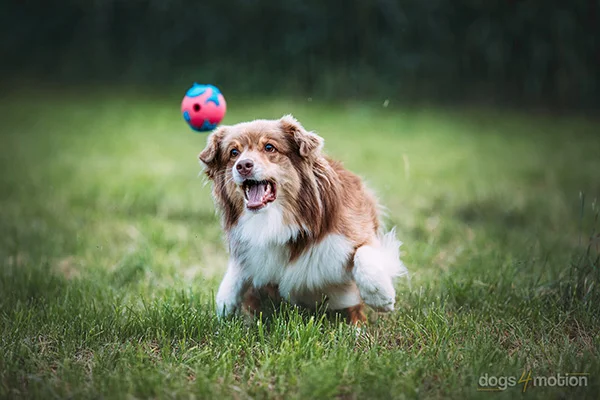
Toes, wrists and knees in particular can be put under a lot of strain. Other parts of the body can also be affected by sudden braking, turning or landing awkwardly.
The risk increases when a dog chases a ball straight out of the car or the house without a proper warm-up.
Not just physical
Something also happens in your dog's head during this kind of game.
Chasing a moving object can cause a lot of excitement. The body gets ready for action, and adrenaline, among other things, plays a role.
Some dogs can become more and more obsessive because of this. As soon as the ball appears, the rest of the world seems to disappear. They keep asking for one more throw and seem to find it hard to stop on their own.
A dog that is completely exhausted after twenty minutes of ball throwing is therefore not automatically a relaxed dog.
Tired and relaxed are two different things.
For dogs that get highly aroused quickly or have trouble calming down after activity, endless ball throwing can actually backfire.
So should the ball go away completely?
No. A ball can be a perfectly good part of playing together.
The difference is mainly in how you use it.
Instead of throwing a ball as far as possible dozens of times in a row, you can alternate the game with activities in which your dog uses its body and brain in a different way.
For example:
- Hide the ball and let your dog search for it.
- Scatter some treats in the grass and let your dog sniff them out.
- Play a game of tug together.
- Practice a recall or other fun skills in between.
- Hide a toy, glove or other object and let your dog search for it.
- During the walk, take time to calmly explore new places and smells.
- Use the ball now and then as a reward instead of as an endless fetch game.
Sniffing instead of running
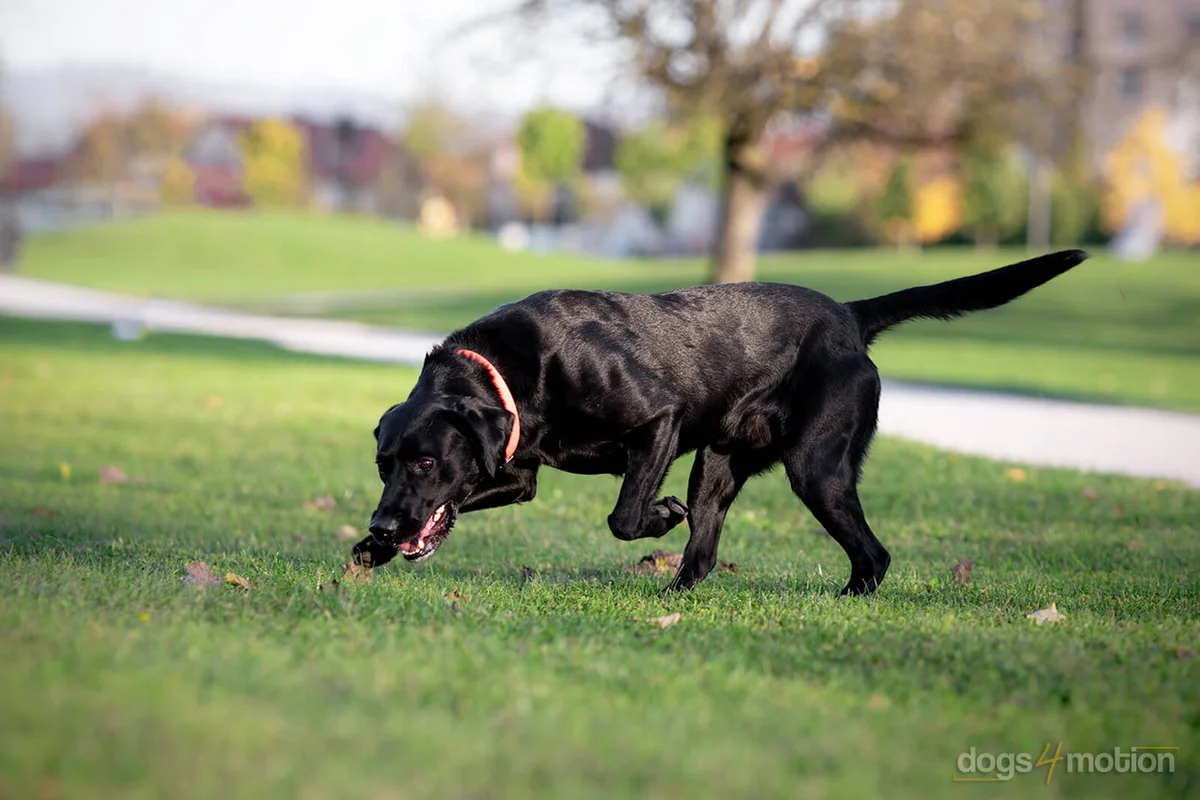
Nose work is a great counterbalance to fast, physical activities.
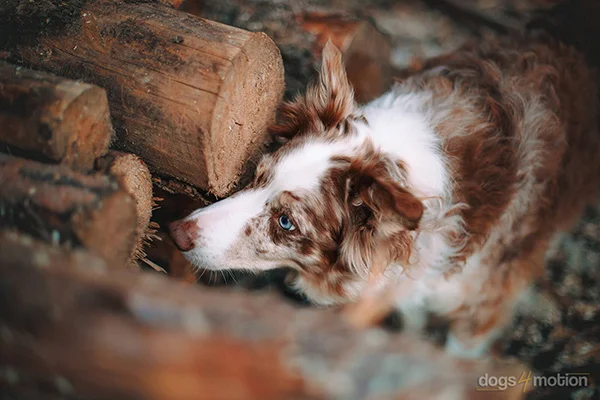
Sniffing matches natural dog behavior and requires concentration. A dog doesn't have to move harder or faster to be nicely occupied.
You can keep it very simple. For example, toss a handful of kibble into the grass or hide a favorite toy.
For many dogs, searching is at least as much fun as chasing something.
Playing together
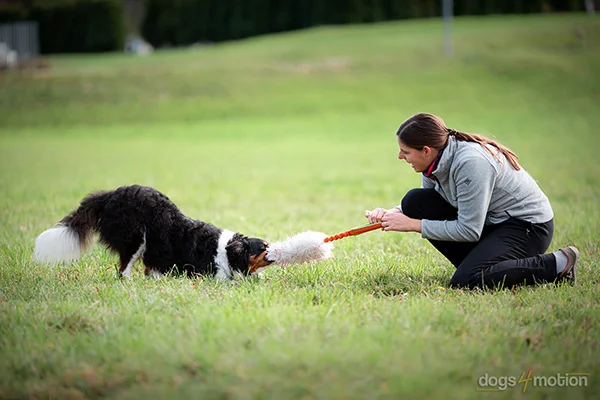
A game of tug can also be a fun alternative.
This game is much more about interaction between you and your dog. Pay attention to what your dog enjoys. One dog likes a calm game of tug, while another likes to play a bit more enthusiastically.
Here too: it doesn't have to go on endlessly. Alternate action with rest.
Don't forget the warm-up and cool-down
Want to do more intensive exercise with your dog? Then don't start at full speed right away.
Let your dog walk calmly first and gradually build up the activity over about 5 to 10 minutes. Do the same at the end: slowly bring the intensity back down.
And always look at the individual dog.
Age, fitness, build, health and previous injuries all play a part in what is sensible.
Just because a dog can do something doesn't automatically mean it's good for it.
In short
You really don't have to throw away your dog's favorite ball.
But use it consciously.
Try not to make it your goal to tire your dog out physically as quickly as possible. A good activity leaves room for moving, sniffing, exploring, thinking, interaction and recovery.
It's exactly that variety that helps your dog come home not just tired, but also satisfied and relaxed.